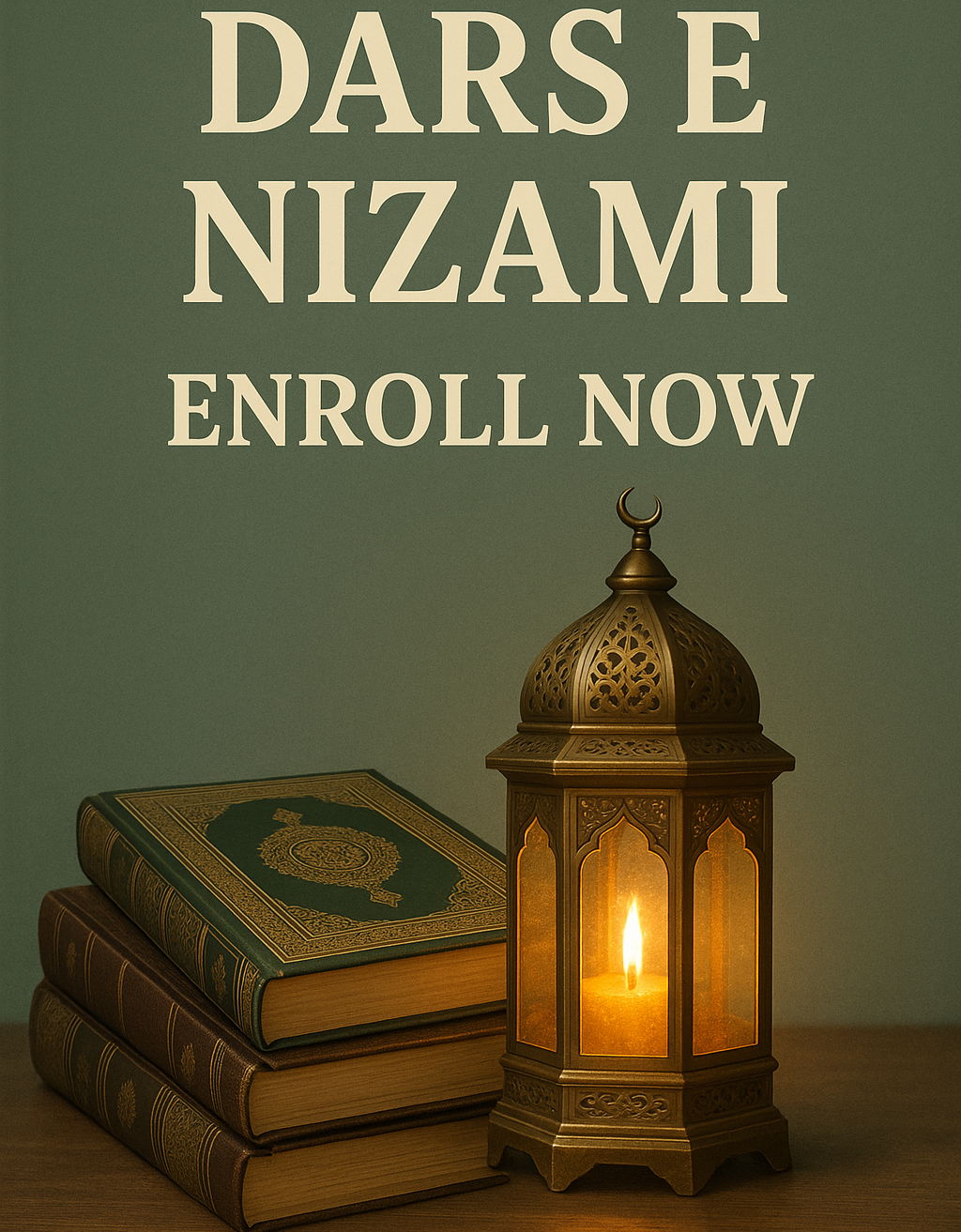
Dars-e-Nizami
About Course
● What is Dars-e-Nizami?
Dars-e-Nizami is the classical Islamic curriculum widely taught in seminaries across the Indian subcontinent and beyond. It was originally compiled by Mullah Nizamuddin Sehalvi (رحمہ الله) and has been in use for over two centuries. The program is designed to produce scholars with a deep understanding of the Quran, Hadith, Fiqh (Islamic law), Arabic language, and other Islamic sciences.
● Duration
Dars-e-Nizami is an eight-year course, divided into progressive levels that take students from the basics of Islamic knowledge to advanced scholarly discussions.
● Years 1–2 (Foundation Level):
● Basics of Arabic grammar (Sarf & Nahw)
● Introductory Tafseer (Quran translation and explanation)
● Basic Fiqh (Taharah, Salah, Sawm)
● Tajweed and Qira’ah (correct recitation of Quran)
● Basic Aqeedah (Islamic beliefs) and Akhlaaq (character development)
● Years 3–4 (Intermediate Level):
● Classical Arabic literature and rhetoric
● Logic and introductory philosophy
● Usul al-Fiqh (principles of jurisprudence)
● Detailed Tafseer of selected Surahs
● Fiqh texts such as Kanz al-Daqaiq and Nur al-Idah
● Years 5–6 (Advanced Level):
● Usul al-Hadith (principles of Hadith)
● Tafseer texts like Jalalayn
● Advanced Fiqh books (Quduri, Hidayah)
● Deep dive into theology (Sharh Aqaaid Nasafi)
● Higher-level logic and philosophy texts
● Year 7 (Mishkat Year):
● Study of Mishkat al-Masabih (comprehensive Hadith collection)
● Detailed study of Usul al-Hadith
● Advanced Fiqh and applied jurisprudence
● Training in ijtihad and resolving contemporary issues
● Year 8 (Dawrah-e-Hadith):
This is the capstone year, dedicated to the detailed study of the Sihah Sittah (the six authentic books of Hadith: Bukhari, Muslim, Tirmidhi, Abu Dawud, Nasai, Ibn Majah) along with other essential Hadith works. This year is considered the crown of the curriculum and polishes the student into a fully qualified Islamic scholar.
● Outcome and Benefits
● Graduates gain mastery over Quran, Hadith, Fiqh, and Arabic.
● They are qualified to issue fatwas, deliver sermons, and teach.
● They become capable of guiding the community on matters of religion and law.
● Many alumni go on to become scholars, Muftis, teachers, researchers, and spiritual leaders around the world.
Course Content
Dars e Nizami
Student Ratings & Reviews